Phone: 778-900-0262 Email:info@coastallawns.ca

Lawn Aeration
Benefits
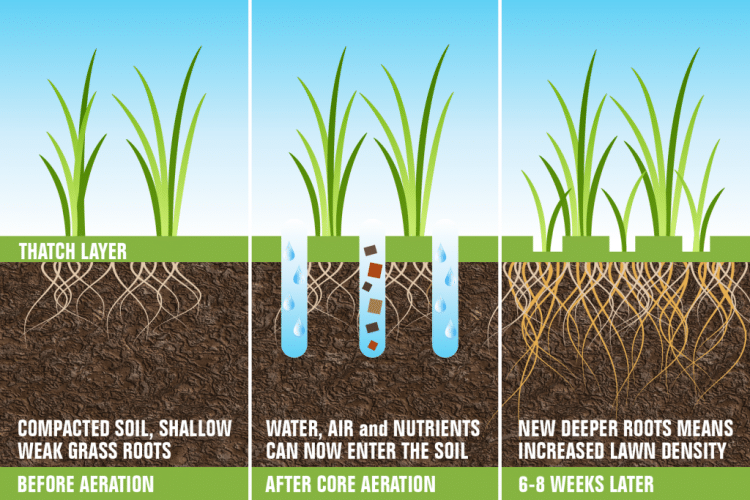
Aerating your lawn offers a range of significant benefits that lead to healthier and more robust grass. Key advantages include:
-
Relieves soil compaction: Creates space in dense soil.
-
Improves water and nutrient penetration: Allows resources to reach roots more effectively.
-
Enhances air circulation: Provides vital oxygen to the root zone.
-
Promotes deeper, stronger root growth: Increases the lawn's resilience to drought and stress.
-
Reduces thatch buildup: Encourages the natural decomposition of dead organic matter.
-
Increases success of overseeding: Provides optimal conditions for new seed germination.
-
Leads to a thicker, greener, and healthier lawn overall.
Process
1) Inspect the lawn
- Walk the yard to check grass condition, problem areas (compaction, bare spots, thatch), and obstacles.
- Note locations of sprinkler heads, shallow irrigation lines, or buried cables.
2) Mark hazards
- Mark sprinkler heads, shallow utilities, and delicate landscape features with flags or cones to avoid damage.
3) Set aerator settings
- Adjust tine depth to remove plugs 2–4 inches long (deeper if compaction is severe).
- Overlap passes slightly (about 2–3 inches) to ensure even coverage.
- For heavy compaction, make a second pass perpendicular to the first.
4) Aerate systematically
- Start at one end and work in straight, overlapping rows for full coverage.
- Slow, steady passes produce the best results — don’t rush the machine.
5) Leave plugs on the surface
- Allow soil cores to break down naturally; they return nutrients and organic matter to the turf.
- If appearance is a concern, you can break up plugs with a rake or run a lawn mower over them after they dry.
6) Post-aeration care
- Avoid heavy traffic on the lawn for at least a week.
- Resume normal mowing when grass reaches mowing height; don’t remove more than 1/3 of the blade at once.
- Expect improved drainage and root growth over the next few weeks.
7) Schedule repeat aeration
-
Most lawns benefit from aeration once a year; heavily used or compacted lawns may need it twice a year.