Phone: 778-900-0262 Email:info@coastallawns.ca

Lawn Seeding
Benefits
Lawn seeding (overseeding) offers several key benefits for lawn health and appearance:
Increases Density: Fills bare spots to create a thicker, more uniform lawn.
Natural Weed Control: Dense grass naturally crowds out weeds by competing for resources.
Enhances Resilience: Introduces modern, robust grass varieties that are more resistant to pests, diseases, and drought.
Improves Appearance: Rejuvenates aging lawns, enhancing overall color and vitality.
Cost-Effective Repair: An inexpensive way to repair damage and avoid a full lawn replacement.
Reduces Soil Erosion: Stronger root systems bind the soil to prevent runoff.
Process
1) Inspect the lawn
- Evaluate bare or thin areas and identify causes such as compaction, shade, or poor drainage.
- Determine whether you need overseeding (adding seed to existing turf) or new seeding (starting fresh).
2) Prepare the soil
- Mow the existing grass short and remove debris, weeds, and dead material.
- Loosen the top layer of soil using a rake or power dethatcher to improve seed-to-soil contact.
3) Amend and level the surface
- Add topsoil or compost where needed to improve soil quality and smooth uneven areas.
- Ensure the surface is firm but not compacted.
4) Select the right seed
-
Choose a grass variety suited to your region, sunlight levels, and soil type.
-
Mix different varieties for durability and year-round color.
5) Apply seed evenly
- Use a broadcast spreader for large areas or hand-spread for smaller patches.
- Apply seed in two passes — one north-south and one east-west — for uniform coverage.
6) Rake and roll lightly
- Gently rake to cover seeds with a thin layer of soil (about ¼ inch).
- Use a lawn roller to press seeds into the soil for better contact and germination.
7) Water thoroughly and consistently
- Water immediately after seeding and keep the soil consistently moist with light, frequent watering.
- Avoid puddling or runoff.
8) Post-seeding care
- Limit foot traffic until new grass is established.
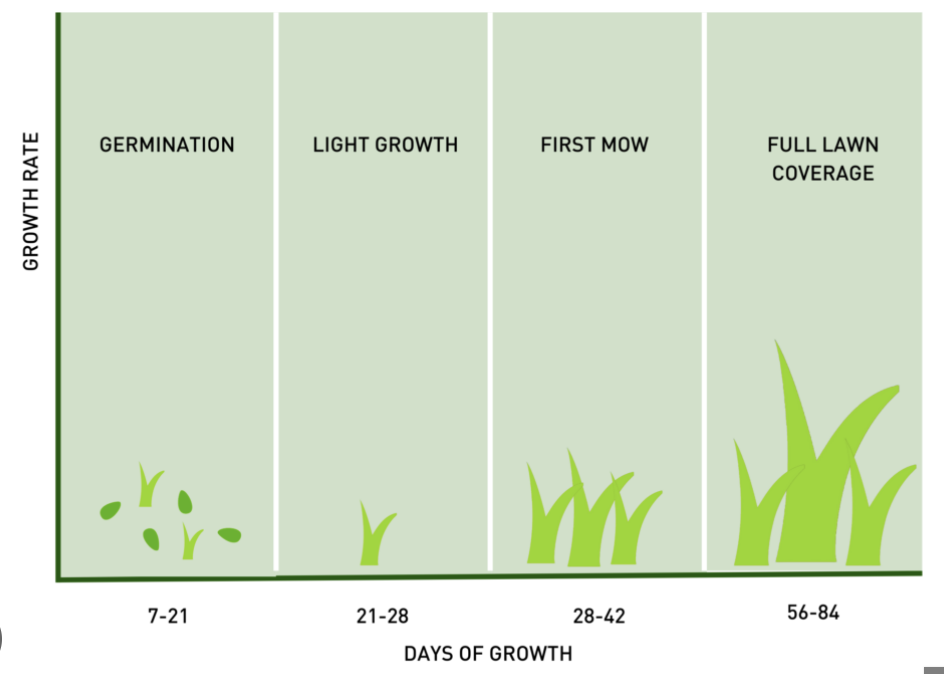
- Mow when new grass reaches 3–4 inches tall, cutting no more than one-third of the blade.
9) Follow-up maintenance
- Fertilize 4–6 weeks after germination to promote root growth.
- Resume normal watering and mowing once the lawn is mature.